City Wall Font: Graffiti Display Type for Handmade Brands
If you've ever held a hand-poured candle, designed a boutique gift tag, or cut vinyl for a farmhouse-style welcome sign—you know how much the right font can elevate your product before a single word is read. City Wall isn’t just another display font. It’s a freestyle, graffiti-inspired typeface that carries the raw energy of street art while staying crisp, legible, and commercially versatile. As someone who prints labels, cuts stickers, designs digital printables, and builds cohesive brand kits for small shops, I’ve tested City Wall across dozens of real-world projects—and it consistently delivers both personality and professionalism.
Why City Wall Fits Your Handmade Aesthetic (Without Sacrificing Clarity)
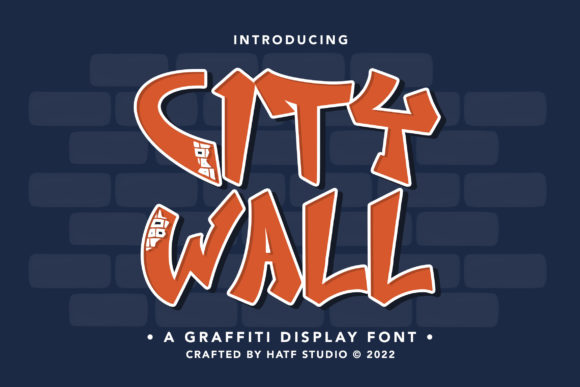
City Wall leans into expressive, angular strokes and uneven baselines—just enough to feel unrehearsed and alive, but not so wild that it compromises readability at small sizes. The characters have intentional weight variation and subtle texture, giving them dimension when printed on kraft paper, foil-stamped tags, or matte vinyl. Unlike some “graffiti” fonts that blur into illegibility below 24pt, City Wall holds up beautifully at 16–18pt on product labels and 20pt on 3"x3" sticker sheets. That matters when your candle jar label needs to be scannable in a dimly lit boutique—or when your Etsy customer zooms in on your mockup preview.
Real Projects Where City Wall Shines
- Candle & soap labels: Pair City Wall with a clean sans serif (like Montserrat or Inter) for your brand name in bold, then use City Wall for scent names like “Midnight Rain” or “Burnt Sugar.” Its urban edge adds authenticity without clashing with natural ingredients or minimalist packaging.
- Wedding stationery: Use it for rustic-chic welcome signs, seating charts, or acrylic table numbers. Try it in charcoal gray on ivory linen cardstock—it reads as warm, modern, and intentionally unpolished, perfect for barn venues or industrial lofts.
- Digital printables: City Wall works especially well in planner covers, quote posters, and habit trackers where you want visual impact without overwhelming the layout. Its PUA encoding means you can access alternate glyphs and stylistic ligatures directly in design tools—no manual character mapping needed.
- SVG files & cutting machine projects: Whether you’re layering it in Cricut Design Space or prepping a Silhouette Studio file for iron-on transfers, City Wall’s open counters and consistent stroke width prevent tiny details from collapsing during cut or weeding. Test at 1.5x scale first if using intricate swashes on 1/4" vinyl.
- Seasonal product packaging: Think holiday mugs, summer tote bags, or spring market banners. City Wall gives “Farmers Market Fresh” or “Limited Edition Batch” an energetic, human-made feel—ideal for small-batch brands wanting to stand out next to mass-produced competitors.
Pairing City Wall Thoughtfully (No Design Degree Required)
You don’t need to be a typographer to make City Wall work harder for your brand. Start simple: pair it with a neutral sans serif for body text, captions, or fine print. For example, use City Wall for “Hand-Poured in Portland” and Lato Light for the care instructions underneath. If you're designing invitations or social graphics, try layering it with a soft script font (like Allura or Pacifico) for names or dates—just keep the script light and airy so City Wall remains the anchor. Avoid pairing it with other high-contrast display fonts; its personality is strong enough to carry the hierarchy alone.
What You’ll Actually Get (and Why It Matters)
City Wall is PUA encoded, which means every alternate character, swash, and decorative glyph lives at a predictable keyboard location—no hunting through glyph panels. That saves real time when building SVG bundles or batch-generating printable sets. While it’s not a multilingual font (no extended Latin or Cyrillic support), it covers standard English, accented characters for common European names, and includes punctuation optimized for signage and packaging. File formats typically include OTF and TTF—both fully compatible with Canva, Adobe Creative Cloud, Cricut, Silhouette, and Affinity apps.
Commercial Use? Yes—But Verify Your License
This is non-negotiable: City Wall is licensed for commercial use, including physical products (mugs, shirts, tags), digital downloads (PDF planners, PNG clipart, SVG bundles), client work, and even resale in template marketplaces—as long as you follow the license terms. Always double-check whether embedding in editable templates (like Canva-based editable invites) is permitted, and whether redistribution of the font file itself is restricted. Most reputable sellers allow full commercial rights for end products—but never assume. When in doubt, email the creator. A quick reply often saves you from a takedown notice later.
Final Notes for Crafters Who Ship Real Things
City Wall isn’t meant for paragraphs or ingredient lists. It’s a display font—best used for headlines, names, short phrases, and branding elements where attention and tone matter most. For longer text, always switch to something highly legible. Also, test print before bulk runs: some inkjet printers soften edges on textured fonts, so a laser printer or professional print service may give sharper results on kraft tags or greeting cards. And if you’re designing for mockups, preview City Wall at actual size—not just zoomed-in thumbnails—to catch spacing quirks early.
At its core, City Wall helps handmade sellers communicate confidence, creativity, and craftsmanship—not through perfection, but through intention. It says “I made this,” not “I found this online.” That subtle distinction? It’s what keeps customers coming back for more than just the product—they’re buying into the voice behind it.